Last updated June 28, 2026
The Complete Guide to Garage Door in Miami
Most Miami homeowners spend more time picking their front door paint color than thinking about their garage door — yet the garage door is typically the largest moving part of the entire home, accounts for up to 40% of a home’s visible street frontage, and fails more often than any other entry point. In Miami’s climate, that failure rate climbs. Salt air off Biscayne Bay accelerates metal corrosion. The humidity that makes August feel like a steam room quietly destroys springs, cables, and opener circuit boards. And hurricane season adds a layer of structural risk that simply doesn’t exist in Phoenix or Denver. This guide walks you through everything you need to know about garage doors in Miami — from choosing the right door for South Florida conditions to diagnosing problems, understanding real local costs, and knowing when a repair becomes a replacement.
Quick Answer
A garage door in Miami needs to meet Florida’s strict wind-load and impact-resistance codes, handle near-constant humidity and salt-air exposure, and be maintained more frequently than in drier climates. Most repairs run between $150–$450 depending on the component; full door replacements typically range from $900–$3,200 installed. Choosing a door rated for Miami-Dade County’s wind requirements and scheduling annual maintenance are the two decisions that save Miami homeowners the most money over time.
Table of Contents
- How Miami’s Climate Affects Your Garage Door
- Miami-Dade Wind Code and Hurricane Requirements
- Types of Garage Doors: Which One Works Best in Miami
- Garage Door Openers: Choosing the Right One for Miami
- The Most Common Garage Door Problems We See in Miami
- How Much Does a Garage Door Cost in Miami?
- Garage Door Maintenance in Miami: A Seasonal Checklist
- Common Mistakes to Avoid
- When to Call a Professional
- Frequently Asked Questions
- The Bottom Line
How Miami’s Climate Affects Your Garage Door
Miami sits at roughly 8 feet above sea level, surrounded on three sides by salt water. That geographic reality translates directly into accelerated wear on any metal component your garage door uses — and garage doors use a lot of them. Springs, cables, hinges, rollers, and track hardware are all exposed to a combination of salt-laden air, daily humidity swings, and UV radiation that ranks among the most intense in the continental United States.
In our 16 years working on garage doors across Miami, we’ve seen galvanized torsion springs fail in as little as four years on homes in waterfront neighborhoods like Coconut Grove and Key Biscayne — nearly half the lifespan you’d expect in an inland market. Standard steel panels develop surface rust within two to three years if they aren’t sealed and touched up annually. Aluminum and fiberglass doors, by contrast, handle salt air considerably better and are worth the modest price premium in most Miami zip codes.
Heat is the other factor most homeowners underestimate. When a Miami garage hits 110°F in July — which is common in an uninsulated two-car garage with a west-facing door — the lubricants inside roller bearings and the plastic components inside opener logic boards degrade faster than manufacturer specs predict. Insulated steel doors with a high R-value aren’t just a comfort upgrade; in Miami they’re a meaningful equipment-protection decision.
- Salt air corrosion: Accelerates spring and cable failure, especially within two miles of the coast
- UV exposure: Fades and cracks painted steel and vinyl panels within 3–5 years without UV-protective sealant
- Humidity cycling: Wood doors warp and swell seasonally — they’re generally a poor choice for Miami
- Extreme heat: Degrades opener logic boards and accelerates lubricant breakdown in moving parts
Miami-Dade Wind Code and Hurricane Requirements
This section matters more in Miami than almost anywhere else in the country. Miami-Dade County enforces one of the most stringent building codes in the United States, and garage doors fall squarely under those requirements. A non-compliant door isn’t just a code violation — it’s a structural liability during a storm. When a garage door fails in high winds, the resulting pressure differential can lift the roof off a home.
Miami-Dade requires garage doors to carry a Notice of Acceptance (NOA), which certifies the door has been tested and approved for the county’s wind-load and impact-resistance standards. The current threshold for most residential areas in Miami is a design wind speed of 175 mph or higher. If you’re replacing a garage door in Miami, this isn’t optional — a permitted installation requires an NOA-compliant product, and inspectors will verify it.
Key points Miami homeowners need to know:
- Check the NOA number before you buy. Every door sold for Miami-Dade installation should have a Miami-Dade NOA listed in its product documentation. Ask your installer to confirm it before work begins.
- Hurricane bracing kits don’t replace a rated door. Some older Miami homes have standard doors with aftermarket bracing struts added. These provide partial protection but don’t meet current code for permitted work.
- Impact-rated vs. wind-load rated: In Miami-Dade’s High Velocity Hurricane Zone (HVHZ), doors must meet both criteria. Impact resistance addresses flying debris; wind-load rating addresses sustained pressure. You need both.
- Permits are required for full door replacements. In Miami, swapping a door for a non-like-for-like replacement typically requires a pull permit through Miami-Dade’s Building Department. Working without one can complicate homeowners’ insurance claims and future home sales.
- Brands with strong Miami-Dade NOA catalogs include: Clopay, Amarr, Wayne Dalton, and Raynor — all of which offer product lines specifically tested and certified for South Florida conditions.
Types of Garage Doors: Which One Works Best in Miami
Not every garage door type performs equally in South Florida’s conditions. Here’s a practical breakdown of what we see working — and what we see failing — in Miami homes.
Steel Doors
Steel is the most common material in Miami and for good reason: it’s durable, available in NOA-certified configurations, and relatively affordable. The critical detail is gauge — heavier gauge steel (24-gauge or thicker) holds up far better to Miami’s UV and humidity than thinner panels. Double-layer or triple-layer insulated steel doors also buffer the interior heat load significantly. Brands like Clopay and Amarr both produce steel doors with Miami-Dade approval ratings that we regularly install and service.
Aluminum and Glass Doors
These have become increasingly popular in Brickell, South Miami, and the Design District, where modern architecture calls for a cleaner aesthetic. Aluminum resists corrosion better than steel in coastal conditions, and full-view aluminum-framed glass doors with tempered or impact glass can meet Miami-Dade’s HVHZ requirements. They cost more — typically $2,000–$4,500 installed — but the corrosion resistance is a genuine long-term value in saltier zip codes.
Wood and Wood Composite
Real wood garage doors are difficult to maintain in Miami’s humidity. They absorb moisture, swell in summer, and require repainting or restaining every two to three years. Wood composite doors handle the humidity better but still carry a maintenance burden. We only recommend them to homeowners who are committed to annual upkeep and want a specific aesthetic that steel can’t match.
Fiberglass
Fiberglass doesn’t corrode and handles salt air well, but it becomes brittle over time under intense UV exposure — a real issue given Miami’s sun index. It’s a niche choice, but it has its place for certain coastal applications.
Garage Door Openers: Choosing the Right One for Miami
The opener is the mechanical heart of any automated garage door system, and in Miami the heat load inside a garage can shorten opener lifespans if you don’t choose wisely. We stock and service all the major opener brands: LiftMaster, Chamberlain, Genie, and Craftsman, among others — and the right choice depends on your door weight, usage frequency, and whether you want smart-home integration.
Belt Drive vs. Chain Drive vs. Direct Drive
Belt drive openers run quieter and handle humidity better than chain drives over time, making them our most common recommendation for attached garages in Miami where the vibration and noise travel into living spaces. Chain drive openers are more affordable and perfectly reliable but require more lubrication maintenance in humid climates. Direct drive units from brands like Chamberlain have no chain or belt to wear — just a motor moving along a fixed rail — which reduces moving-part failure points considerably.
Battery Backup: Not Optional in Miami
During hurricane season, power outages are routine — sometimes lasting days. An opener without battery backup means you can’t operate your door electrically during and after a storm. LiftMaster’s battery backup models and Chamberlain’s equivalent lines are the products we most frequently recommend to Miami homeowners specifically for this reason. Consider it a baseline feature, not a luxury upgrade.
Smart Opener Features
MyQ technology (LiftMaster/Chamberlain) and Aladdin Connect (Genie) allow remote monitoring and control from your phone — useful if you’re evacuating ahead of a storm and want to confirm your door is closed without driving back home. After a decade-plus of hurricane evacuations in Miami, we’ve seen this feature become genuinely valuable, not just a tech novelty.
The Most Common Garage Door Problems We See in Miami
Sixteen years of service calls across Miami teaches you which problems show up most — and which ones Miami’s climate makes worse than average. Here’s what we diagnose most often:
- Broken torsion springs: The single most common repair call we receive. Miami’s humidity and salt air accelerate metal fatigue. Springs typically last 7,000–10,000 cycles, but coastal conditions can cut that lifespan noticeably. In neighborhoods like Palmetto Bay and Pinecrest, we see spring failures cluster in the 4–6 year range on homes close to the bay.
- Corroded or snapped cables: Cables work in tandem with springs to balance the door’s weight. Salt-air corrosion attacks cable strands individually — the cable looks intact until it isn’t. We replace cables proactively whenever we see surface rust, because a snapped cable under tension is dangerous.
- Misaligned or bent tracks: Miami’s summer thunderstorms occasionally send debris into open garage bays. A track bent even a quarter-inch can cause the door to bind, jump the track, or reverse unexpectedly.
- Opener logic board failure: The heat inside a Miami garage accelerates circuit board wear. We see this most in garages that face west or lack any ventilation — the board literally cooks over time. LiftMaster and Chamberlain replacement boards are stocked locally and usually a same-day fix.
- Weather seal deterioration: The bottom seal and side seals on a Miami garage door take a beating from UV, heat, and the occasional flooding event. A failed bottom seal lets in water, insects, and humidity — all of which damage stored items and the door’s lower panel over time.
- Roller wear: Nylon rollers handle Miami’s humidity better than steel rollers, but both wear out. Worn rollers cause the door to run rough, noisy, and off-center — and they accelerate track wear if left unaddressed.
How Much Does a Garage Door Cost in Miami?
Miami repair and installation costs sit modestly above national averages, reflecting higher labor costs, the added expense of NOA-compliant products, and permitting requirements that don’t apply in most other U.S. markets. Here’s a realistic breakdown based on what we see in the Miami market:
| Service | Typical Miami Price Range |
|---|---|
| Torsion spring replacement (single) | $180–$290 |
| Torsion spring replacement (double) | $240–$380 |
| Cable replacement | $150–$250 |
| Roller replacement (set) | $100–$185 |
| Opener replacement (installed) | $320–$620 |
| Weather seal replacement | $90–$200 |
| Track realignment | $120–$220 |
| New steel door installation (NOA-rated, single) | $900–$1,800 |
| New steel door installation (NOA-rated, double) | $1,400–$3,200 |
| Aluminum/glass door installation | $2,000–$4,500 |
| Emergency service call | $75–$150 trip fee (applied to repair) |
These ranges assume standard residential work. Commercial doors, custom sizes, or doors requiring city-permitted installation add to the total. Always get an itemized estimate before work begins — and be cautious of any quote that seems significantly below these ranges without a clear explanation, as it often means non-compliant materials or unlicensed labor.
For an exact quote on your situation, call (786) 808-7839 — estimates are free and Gary Hill can typically give you a firm number before any work starts.
Garage Door Maintenance in Miami: A Seasonal Checklist
In most of the country, once-a-year maintenance is fine. In Miami, we recommend a twice-yearly schedule — once before hurricane season (May) and once after it ends (November). The reasoning is straightforward: hurricane season is when your door faces its greatest structural test, and catching problems before June is far better than discovering them during a named storm.
Pre-Hurricane Season Checklist (April–May)
- Test auto-reverse safety: Place a 2×4 flat on the ground in the door’s path and close the door. It must reverse on contact. If it doesn’t, the force settings need adjustment immediately.
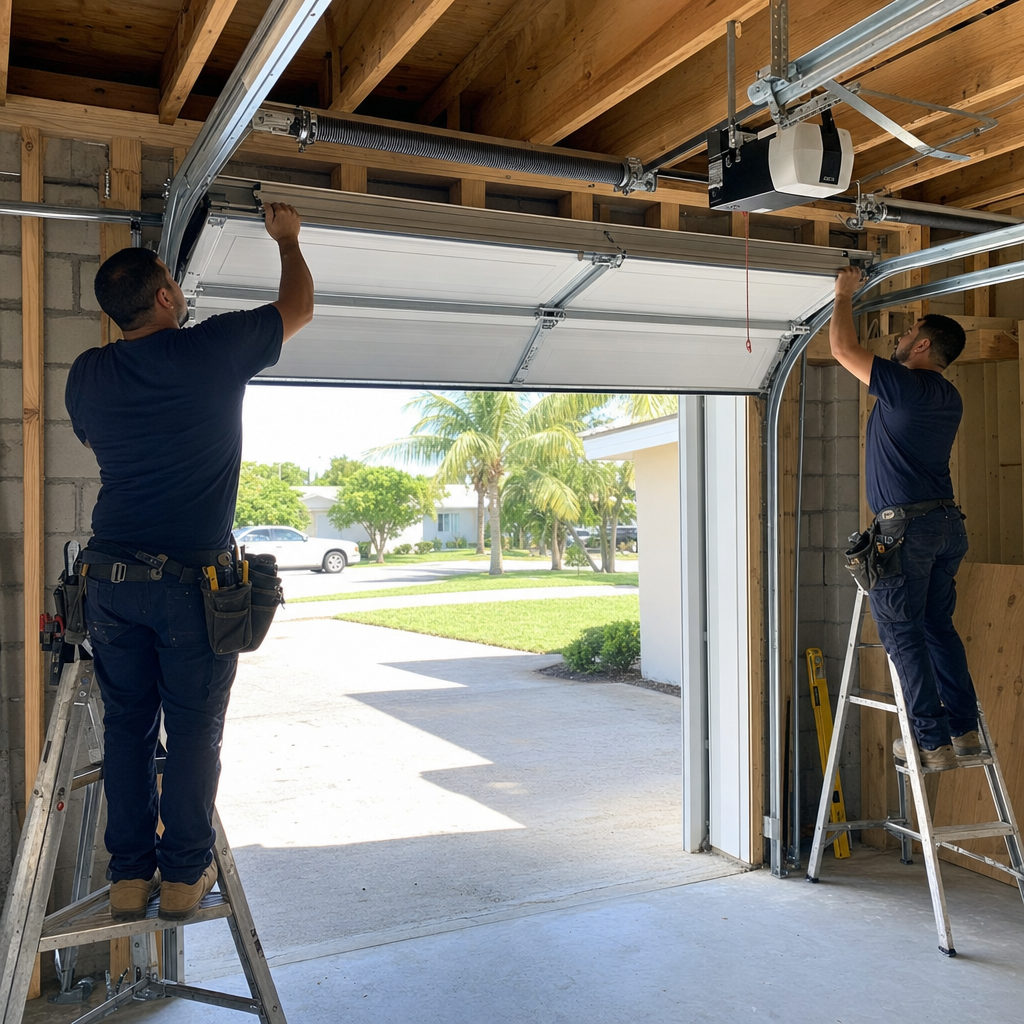
- Inspect springs and cables: Look for visible rust, fraying on cables, or any gaps in spring coils. Don’t attempt to adjust springs yourself — torsion springs are under extreme tension and require professional tools.
- Lubricate all moving parts: Use a silicone-based spray on rollers, hinges, and the track. Avoid WD-40 — it’s a solvent, not a lubricant, and it strips the oil film you actually need. In Miami’s heat, re-lubrication every six months is the right interval.
- Check weather seals: Run your hand along the bottom seal and side seals. Any cracking, gaps, or compression failure means water will enter during heavy rain. Replace seals before storm season.
- Confirm battery backup is functional: Disconnect your opener from power and attempt to operate the door. If the battery backup doesn’t engage, replace the battery now rather than during a power outage.
- Verify manual release cord works: If you need to evacuate and the power is out, you need to be able to disengage the opener and operate the door manually. Test it before you need it.
- Check panel hardware: Tighten any loose bolts on hinges and brackets — vibration from normal operation slowly works them loose over time.
Post-Hurricane Season Checklist (November–December)
- Re-lubricate all moving parts after the wet season’s humidity exposure
- Inspect panels for dents, surface rust, or paint failure that needs touch-up before winter UV continues the damage
- Check opener settings and remote batteries
- Clean and inspect the photo-eye sensors — Miami’s dust and pollen can coat sensor lenses over a season
- Test the door’s balance: disconnect the opener and lift the door manually to waist height. It should stay put. If it drifts up or drops, the spring tension needs professional adjustment.
Common Mistakes to Avoid
- Buying a door without verifying its Miami-Dade NOA. Not every “hurricane-rated” door actually holds a Miami-Dade Notice of Acceptance. Ask for the NOA document number before purchase — if the seller can’t produce it, walk away. In Miami’s HVHZ, this isn’t bureaucratic formality; it’s structural safety.
- Using WD-40 as a garage door lubricant. We see this constantly on service calls across Miami. WD-40 displaces moisture temporarily but actually strips the lubrication from roller bearings and hinges. Within a few weeks the door is noisier and stiffer than before. Use a dedicated silicone or lithium-based garage door lubricant.
- Ignoring minor spring rust until it’s a full failure. In Miami’s humidity, surface rust on a torsion spring isn’t just cosmetic — it’s early-stage metal fatigue. We’ve seen springs in Doral and Kendall go from “a little rust” to complete fracture within a single wet season. Catch it at the inspection stage and it’s a lubrication or monitoring situation; ignore it and it becomes an emergency repair.
- Attempting DIY torsion spring replacement. This is the one garage door repair that we genuinely ask homeowners not to attempt themselves. A torsion spring holds hundreds of pounds of stored energy. Improper handling without the right winding bars and technique has sent people to emergency rooms. The repair cost is not worth the risk.
- Skipping permits on a full door replacement. Some contractors will offer to skip the permit to save money. In Miami, this can void your homeowner’s insurance coverage for storm damage related to the door, complicate your home sale inspection, and leave you legally liable if the door fails during a hurricane. It’s not worth it.
- Choosing a wood door for a salt-air-exposed garage. Real wood garage doors look beautiful in showrooms. In Miami neighborhoods like Coconut Grove or Morningside, within two years they’re warping, peeling, and requiring constant maintenance. Unless you have a very specific aesthetic requirement and a commitment to annual upkeep, the material is simply wrong for this climate.
- Not testing battery backup before hurricane season. We field emergency calls every June from homeowners who discover their backup battery is dead when they’re trying to manually operate the door before evacuating. Test it in April — it takes 90 seconds and saves significant stress at the worst possible time.
When to Call a Professional
Some garage door tasks are genuine DIY territory — replacing a remote battery, cleaning photo-eye sensors, touching up weather seal adhesive. But several situations call for a trained technician, and in Miami those situations come up more frequently than in most markets:
- Any broken or visibly corroded spring — torsion springs under tension are dangerous to handle without professional equipment
- A door that’s off-track, jammed, or won’t reverse when it should
- Snapped or frayed cables — these are under significant tension and require professional tools to replace safely
- A door that fails to lock down or hold position in high winds — a pre-storm issue that needs same-day attention
- Any opener that’s sparking, burning, or showing circuit board failure
- Post-storm damage — even minor panel dents can indicate track or hardware impact that isn’t visible from the outside
- Full door replacement requiring a Miami-Dade-compliant installation and permit
Miami Local Garage Door Repair Pros offers free estimates in Miami — call (786) 808-7839 and Gary Hill can typically assess your situation over the phone before scheduling a visit. Emergency garage door service is available for urgent situations where a stuck or damaged door can’t wait.
Frequently Asked Questions
How much does garage door repair cost in Miami?
Most garage door repairs in Miami fall between $150 and $450 depending on the part and complexity of the work. Spring replacements — the most common repair — typically run $180–$380 in the Miami market, with the variation driven by spring type, door weight, and whether one or two springs need replacement. Opener repairs vary more widely, from a $90 remote reprogramming to a $400+ logic board replacement. Call (786) 808-7839 for a free, itemized estimate with no obligation.
Does my garage door need to meet Miami-Dade hurricane code?
Yes — if you’re replacing a garage door in Miami, it must carry a Miami-Dade Notice of Acceptance (NOA) certifying it for the High Velocity Hurricane Zone (HVHZ) wind-load and impact-resistance requirements. This applies to permitted installations, which includes virtually all full door replacements. Repairs to existing door components (springs, cables, openers) don’t typically require a new NOA, but if the door itself is being swapped, compliance is mandatory.
How long do garage door springs last in Miami?
Standard torsion springs are rated for 10,000 cycles — roughly 7–10 years for a typical household with two cars. In Miami, coastal conditions and humidity can reduce that lifespan to 4–7 years, particularly for homes within a mile or two of the water in areas like Key Biscayne, South Beach, or Coconut Grove. If your springs are showing surface rust or are more than five years old, a proactive inspection before hurricane season is time well spent.
Can I replace my garage door opener myself in Miami?
Installing a basic opener on an existing, properly balanced door is within reach for a capable DIYer. The more important question in Miami is whether the opener you choose includes a battery backup — which it should, given the frequency of hurricane-season power outages. However, if the door itself needs any adjustment, the spring tension needs tuning, or you’re installing on a heavier NOA-rated door, professional installation ensures the opener is calibrated correctly and operates safely. Brands like LiftMaster, Chamberlain, and Genie all have Miami-specific model lines worth considering.
Is it better to repair or replace a garage door in Miami?
Repair makes sense when the door structure itself is sound and the problem is isolated to a mechanical component — springs, cables, rollers, or opener. Replace when panels are significantly dented or rusted (compromising structural integrity in a storm), when the door lacks a Miami-Dade NOA and you’re doing permitted work, or when the cumulative repair cost approaches 50% of a new door’s installed price. In our experience across Miami, doors over 15 years old with visible corrosion are usually better candidates for replacement than continued repair.
What’s the best garage door brand for Miami homes?
There’s no single answer, but for Miami conditions we most frequently recommend Clopay, Amarr, and Wayne Dalton for steel doors — all three have strong Miami-Dade NOA catalogs and proven track records in South Florida’s climate. For aluminum and glass doors, Raynor offers well-regarded modern options. The “best” brand is ultimately the one whose specific model has the NOA rating your installation requires and whose warranty terms hold up under the humidity and UV conditions Miami delivers. We’re experienced with all eight major brands and can help you match the right product to your door opening, budget, and neighborhood conditions.
The Bottom Line
A garage door in Miami isn’t a generic home improvement project — it’s a decision shaped by hurricane codes, salt air, intense UV, and a permitting process that exists for good structural reasons. The homeowners who get the most out of their garage doors in Miami are the ones who buy NOA-certified products, schedule biannual maintenance, and address small problems before storm season turns them into urgent ones. Whether you’re looking at a spring replacement in Kendall, a full door upgrade in Coral Gables, or an opener with battery backup before the next named storm, the information in this guide gives you the foundation to make a smart, informed decision.
For anything that needs a trained technician, Gary Hill and the team at Miami Local Garage Door Repair Pros are available for free estimates, emergency service, and straightforward answers — no upsell, no runaround. Call (786) 808-7839 to schedule your estimate today.
We also serve the Princeton area with the same owner-operated approach — you can learn more about Garage Door Repair in Princeton, Garage Door Installation in Princeton, and Garage Door Opener in Princeton through those dedicated pages.
Written by Gary Hill, Owner & Lead Technician at Miami Local Garage Door Repair Pros, serving Miami since 2010.